



From Croatia with a New Perspective: On Regenerativity, Management and the Future of Organisations
What makes some organisations remain full of energy after many years, while others burn out despite good ideas and committed people? How can we recognise the moment when a team is already running on reserves — and what can be done about it? This article brings together our experiences from the Erasmus+ training in Croatia and our work with tools that help us understand organisations as living systems. It is for people working in NGOs, institutions, education and small teams who want to act in a long-term, responsible way.
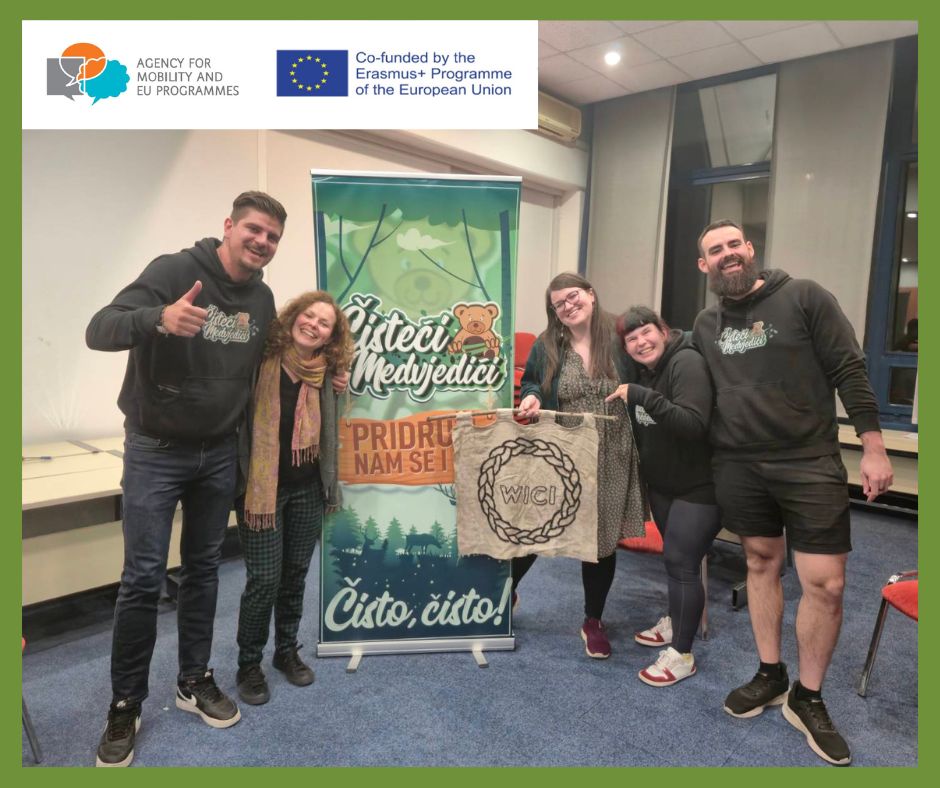
In November, Anna Raczkowska and Emilia Pawłusz — that is, two-thirds of the board of our association Wici — participated in the international training course “Sustainable Future of Organisations” in Stubičke Toplice, Croatia. The trip was part of an Erasmus+ (KA210) project, implemented by Academy of Growth e.V. from Germany and Čisteći Medvjedići from Croatia. There we met young leaders, educators and NGO staff from various countries, to explore new ways of thinking about organisational work, governance and team relationships.
What an Erasmus+ training course looks like
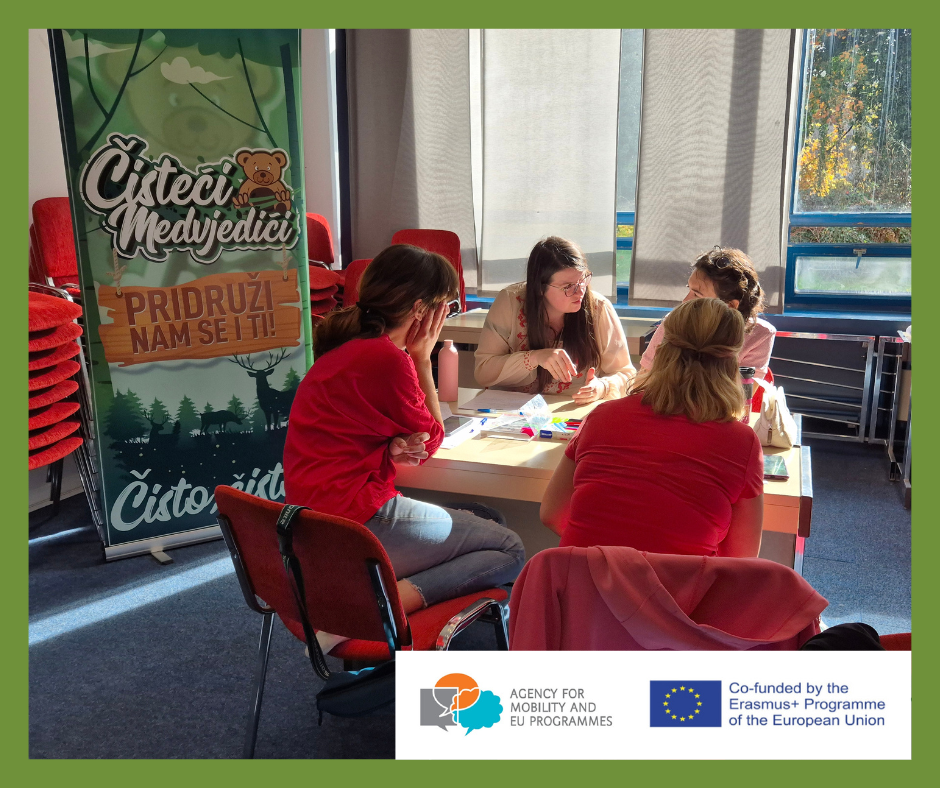
The training was intense and workshop-based, using methods of non-formal education — a style where learning happens through doing, reflection, group work and real-life problem solving, instead of listening passively. We worked in international teams on real challenges each organisation brought with them. The emphasis was on exchange of experiences: different countries, different contexts — but often very similar problems and questions about the organisation’s future.
A big part was devoted to team well-being, communication, and long-term planning that doesn’t rely on overwork, but on conscious resource management. Because the training was hands-on, we could immediately relate many methods to our reality in Wici.
What resonated most: regenerativity and the Holistic Context approach
Two approaches struck us especially strongly. First — management and operations based on the principle of regeneration. Borrowed from nature, where systems go through cycles of growth, rest and renewal, this metaphor also works for organisations: as living systems that need balance, energy and space for sustainable development. A regenerative organisation doesn’t chase “more, faster, cheaper” — instead, it builds conditions where people, ideas and relationships can grow healthily over time.
The second key element was the Holistic Context method — a comprehensive approach to defining goals and making decisions. It requires time, collective reflection and collaborative work — yet delivers proportional benefits: coherence in actions, a clearer direction for development, and decisions grounded in the organisation’s values and in the real needs of the team.
How is your organisation actually managed?
One of the most enlightening tools we worked with was the “Regeneration Spectrum Scale: Self-Assessment” (pages 23–24 of the guidebook). It allows organisations to evaluate their daily practices through three lenses — degenerative, balanced (sustainable), and regenerative.
Degenerative actions — those slowly draining team energy, leading to burnout, tension or chaos. Real-life examples:
🔴 One person carrying most of the projects for months, because “they know best,” while others gradually withdraw or fear taking over responsibility.
🔴 Constant “firefighting” instead of planning — decisions made last-minute, changing during implementation, without time for discussion or clarity about who does what.
Balanced (sustainable) actions — those that keep the organisation stable, but don’t yet make space for growth or change. Examples:
🟡 Running projects “one call after another” — deadlines met, work done, but after each project the team is worn out and there’s no time to reflect what worked and what could improve.
🟡 Polite and smooth cooperation, but without space for difficult conversations about overload, boundaries or internal conflicts — because “there’s no time” or “that’s not relevant right now;
Regenerative actions — those that genuinely rebuild resources — human, organisational, relational — and enable healthy growth. Examples:
🟢 After a demanding project, pausing for a few days: team debrief, open talk about feelings, tiredness and needs, rather than immediately starting new tasks; time for celebration and appreciation.
🟢 Making decisions collectively, even if it takes longer — with awareness of who carries what responsibilities, what resources are available, and what is realistically achievable at the moment; making decisions that serve long-term goals.
For us at Wici, working with this scale was eye-opening. It helped to name both difficult areas and our strengths. Importantly, with slight adaptation, the tool can be used not only in NGOs, but also in companies, schools or institutions.
What is the guidebook “Sustainable Future of Organisations”?
The project resulted in a free publication: “Sustainable Future of Organisations”, a practical guide for working on strategy, organisational culture, leadership and decision-making, and balance between work and private life.
The guidebook offers diagnostic tools and team exercises — including practices focused on well-being and preventing burnout (see page 71). It doesn’t propose ready-made recipes, but helps structure processes, ask the right questions and build more conscious organisations.

📘 Free PDF to download (to save it, click or copy the link into your browser):
👉 Sustainable Future of Organisations Guidebook (ENG, 2025)
Not only for NGOs
Although the guidebook was created with NGOs in mind, its content is much more universal. It can be valuable also for small business owners, cultural institutions, museums or educational organisations. The concepts it presents are basically about good, responsible management — grounded in values, relations and long-term thinking.
What we bring home from Croatia — and where Wici is going
For us, participating in the training was an important moment of reflection — especially after nearly nine years of Wici’s activity and asking ourselves “what’s next?”. We came back from Croatia full of inspiration — but also with a realisation that in many areas, we’ve already been practising sustainable and regenerative governance for years — we just didn’t call it that. Intuitively, through the everyday running of our organisation, and through many years of cooperation with other associations and institutions, we developed practices very similar to what the guidebook calls regenerative management. Learning its name gave us clarity and a language to describe what we’ve long been doing in practice.
We thank Čisteći Medvjedići 🇭🇷 and Academy of Growth e.V. 🇩🇪 for organising this valuable training course, and all participants for an enriching exchange of experiences. Different countries — very similar challenges.
You must be logged in to post a comment.